- Blog
- Winter Tires vs. All-Season Tires: What Works Best for PEI Driving?
Winter Tires vs. All-Season Tires: What Works Best for PEI Driving?
Here’s the bottom line on winter tires vs. all-season tires: one is built for Prince Edward Island winters, and one is built to compromise. All-season tires start losing grip below 7°C, which on PEI can happen before Halloween. Winter tires are engineered to stay flexible, bite into ice, and stop shorter when it counts. The difference isn’t subtle, and it shows up before you ever see snow on the road.
At Wendell Taylor’s Garage in Stratford, PE, our certified technicians help drivers make this call based on real factors: how far you drive, what roads you’re on, and what’s actually sitting on your rims right now. This guide covers rubber compound, tread performance, braking distances, tread depth, tire pressure, and when all-weather tires might belong in the conversation too.
Why PEI Winters Demand More Than a "Good Enough" Tire
Prince Edward Island winters are not forgiving. You’re dealing with fast temperature swings, early freezes, wet snow, hard-packed ice, and roads that can change from dry pavement to a sheet of ice between one exit and the next. The Confederation Bridge approach in January is not the place to discover your tires weren’t built for this.
Here’s what most drivers don’t realize: the difference between winter tires and all-season tires isn’t just tread pattern. It comes down to the rubber compound itself.
- All-season rubber: Starts to harden when temperatures fall below 7°C (45°F). A stiffer tire cannot grip the road the way a flexible one can.
- Winter tire rubber: Formulated to stay soft and pliable well below freezing, which is exactly what keeps you in control when the temperature drops.
That flexibility isn’t a luxury feature. It’s what determines whether your vehicle stops in 40 metres or 60 metres on an icy road.
Head-to-Head: What Sets These Tires Apart
Let’s put both tires side by side across the categories that matter most for PEI driving conditions.
| Category | Winter Tires | All-Season Tires |
|---|---|---|
| Rubber compound | Stays flexible below 7°C | Hardens in cold temperatures |
| Tread design | Deep, aggressive sipes for snow and ice | Shallower grooves designed for wet and dry roads |
| Braking on ice | Significantly shorter stopping distances | Noticeably longer stopping distances |
| Snow traction | Purpose-built for packed snow and slush | Adequate in light snow only |
| Summer performance | Wears faster in warm weather, less precise handling | Designed for year-round use in moderate climates |
| Best for PEI | November through April | Spring, summer, and fall |
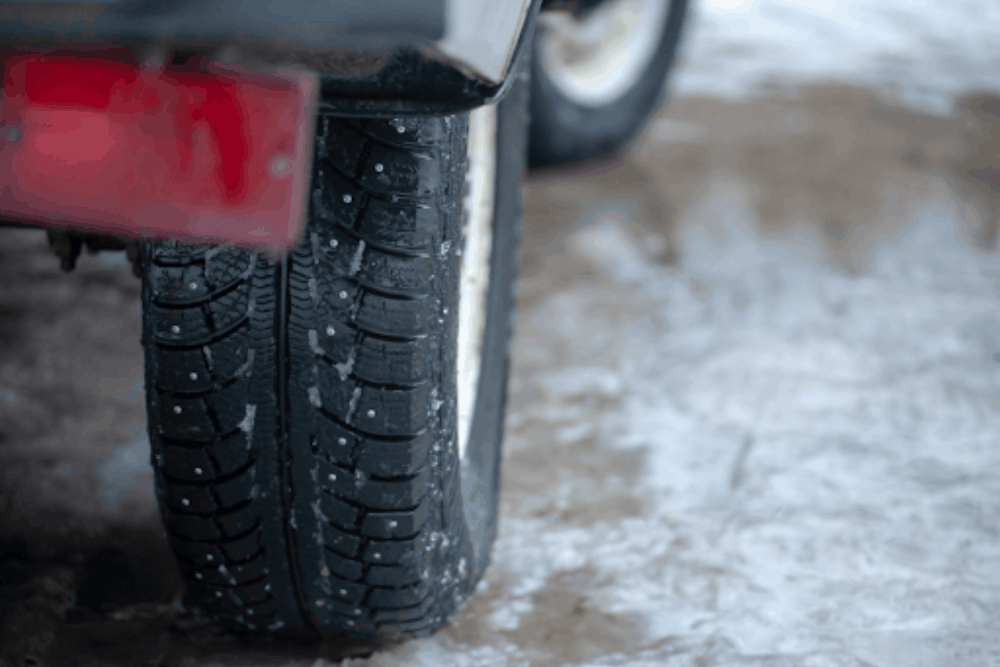
The tread pattern on a winter tire does two jobs: the large blocks push snow and slush away from the contact patch, while the fine cuts called sipes bite into ice and compress snow to create grip. All-season tires aren’t built with that level of cold-weather specificity.
The 7°C Rule Most PEI Drivers Have Never Heard Of
There’s a temperature crossover point in tire performance that most drivers in Charlottetown and Stratford have never been told about, and it makes a real difference in how you plan your tire swap.
Once ambient temperatures consistently fall below 7°C, all-season tires begin to lose grip because the rubber compound stiffens. The tire physically can’t conform to road surface irregularities the way it needs to for reliable braking and cornering. Winter tires are engineered to operate in the opposite direction: they perform better as temperatures fall.
In PEI, October often brings overnight lows close to or below that threshold. That means the smart window for switching to winter tires is mid-October to early November, before the first significant frost or snowfall.
Waiting until you see snow in the forecast is too late. By then, you’ve already been driving on degraded traction for weeks.
Tread Depth, Sipes, and the Ice Grip You Can't See
How Winter Tire Tread Works
The sipes on a winter tire are micro-cuts across each tread block. As the tire rolls over ice, those sipes open slightly and create thousands of tiny biting edges that grip where a smooth tread surface would just slide. It’s the same concept that makes a waffle sole grip better than a flat rubber shoe on a wet floor.
As a winter tire wears down, those sipes get shallower. Most winter tires begin losing their cold-weather advantage below 5/32″ of tread depth, even if there’s rubber remaining. Many winter tire manufacturers recommend replacing them before the season if tread is at or near that threshold.
What Tread Depth Means for Stratford Drivers
If your winter tires are going into their fourth or fifth season, tread depth is worth a close look before you install them. Worn winter tires can give you a false sense of security because the branding still says “winter tire” while the functional advantage has significantly diminished.
This is one of the checks our team runs during tire installation appointments. A quick measurement takes seconds and can tell you whether those tires still have a full season left or whether it’s time to invest in a new set before the ice hits.
All-Season Tires Are Not Three-Season Tires
Here’s a misconception worth clearing up directly: “all-season” does not mean “all winter.” The name suggests year-round capability, but the engineering reality is that all-season tires are designed for spring, summer, and fall use in moderate climates with occasional light snow. They are not designed for sustained cold, packed snow, or ice.
Think of it this way: a light jacket is technically wearable in any season. That doesn’t mean you’d wear one to shovel your driveway in February.
All-season tires carry the M+S (mud and snow) designation, which is based on tread pattern geometry and does not require any standardized performance testing. Only tires carrying the Three-Peak Mountain Snowflake symbol have been independently tested and rated for severe snow conditions. These include dedicated winter tires as well as all-weather tires — both are meaningfully different from a standard M+S all-season.
What About All-Weather Tires?
There’s a third option worth knowing about, especially for PEI drivers who can’t manage a seasonal swap or share one vehicle between two very different schedules.
All-weather tires are engineered to carry the Three-Peak Mountain Snowflake rating while remaining safe to drive year-round. They use a rubber compound that stays more flexible in cold than a standard all-season, with tread designed to handle snow traction testing. They’re not a seasonal tire you pull off in spring.
Here’s the honest trade-off:
- All-weather tires outperform all-season tires in cold, snow, and light ice. They’re a genuine upgrade for drivers who need one set of tires to cover every season.
- Dedicated winter tires still outperform all-weather tires in sustained cold, packed snow, and ice. If you’re driving PEI roads from November through April regularly, a dedicated winter set gives you the strongest cold-weather grip available.
If you’re unsure which category makes the most sense for your vehicle and driving habits, that’s exactly the kind of conversation our team is built for.
Do You Actually Need Winter Tires? Ask Yourself These Questions
Not every driver’s situation is the same. The right answer depends on your vehicle, your commute, and how you use your car from November through April.
- Do you drive early mornings or late evenings? Ice forms overnight and bridges like the Trans-Canada routes into Charlottetown can freeze before road crews respond.
- Do you drive in rural PEI? Secondary roads are plowed less frequently and can stay icy for hours after a storm.
- Do you have children in the vehicle regularly? Stopping distance is not abstract when it’s your kids in the back seat.
- Is your vehicle rear-wheel drive or a lower-clearance sedan? These vehicles benefit most from dedicated winter rubber.
- Do you drive more than 15,000 km per year? Swapping tires seasonally also extends the life of both sets, so the long-term cost is lower than it looks.
If you answered yes to any of those, a conversation about winter tire installation is worth having before the season starts.
Ready to talk tires before the season catches you off guard? Visit Wendell Taylor’s Garage at 31 Hopeton Rd, Stratford, PE C1B 1T6, or call us at 902-569-2509. We’ll check your current tires, walk through your options, and get you booked for installation.
Why the Right Tire Depends on More Than Just the Weather
This is where a blanket recommendation falls short. The right winter tire decision isn’t the same for a Toyota Camry driving between Stratford and Charlottetown every day and a BMW X5 doing school runs and occasional highway trips.
Different vehicles have different load ratings, rim sizes, and manufacturer specifications that affect which tire fits correctly and performs as expected. Installing the wrong spec tire creates its own set of handling and safety problems regardless of how good the rubber compound is.
Beyond fitment, there are related services that often go hand-in-hand with a seasonal tire swap:
- Wheel balancing: New tires should always be balanced. An unbalanced tire vibrates at speed and wears unevenly.
- Alignment check: PEI roads take a toll on suspension geometry. An alignment issue that’s minor in summer becomes a real handling problem on ice.
- Tire pressure: For every 10°F (roughly 6°C) drop in temperature, tire pressure drops approximately 1 PSI. Across a full PEI winter, that can mean a loss of 5 PSI or more without any actual air leak. Winter tires installed at the wrong pressure lose grip and wear faster.
Our Red Seal-certified technicians look at the full picture rather than just mounting a set of tires and sending you on your way.
What Wendell Taylor's Garage Offers PEI Drivers at Tire Season
At Wendell Taylor’s Garage, tire season is one of our busiest stretches of the year, and we take it seriously. We’ve been serving drivers in Stratford and Charlottetown since the 1980s, and the families we see every fall are counting on us to get this right.
Here’s what you can expect when you bring your vehicle to us for tire services:
- Tire Sales: We carry tire options suited to the vehicles and driving conditions in Stratford, PE, and the surrounding area.
- Installation and Balancing: Every tire installation includes proper mounting, torque, and wheel balancing.
- Alignment Inspection: We flag alignment concerns during tire appointments so you’re not losing tread prematurely all winter.
- Tread Depth Check: We measure your current tires so you know exactly what you’re working with before you commit.
- 36-Month/60,000 km Warranty: Our repair warranty backs the work our team does, so you’re covered.
We also offer loaner vehicles, a shuttle service, and pick-up and delivery within Stratford so getting your tires swapped doesn’t have to wreck your schedule. Online scheduling makes it easy to get on our calendar before the first frost hits.
FAQs About Winter Tires vs. All-Season Tires
Are winter tires or all-season tires better for driving in Stratford, PEI?
Winter tires are the better choice for driving in Stratford, PEI once temperatures drop below 7°C, which typically happens in October. PEI winters bring ice, packed snow, and fast-changing road conditions that all-season tires are not engineered to handle reliably. Dedicated winter rubber gives you significantly shorter stopping distances and better overall control throughout the season.
What is the difference between winter tires and all-season tires?
The key difference is the rubber compound and tread design. Winter tires use a softer compound that stays flexible in cold temperatures, along with deep sipes that bite into ice and snow. All-season tires use a harder compound that stiffens in cold weather and a tread designed for general wet and dry performance, not sustained winter conditions.
At what temperature do winter tires perform better than all-season tires?
Winter tires outperform all-season tires once ambient temperatures fall below 7°C (45°F). Below that threshold, the rubber compound in an all-season tire begins to harden and lose grip, while winter tire rubber is specifically formulated to maintain flexibility and traction as temperatures drop further.
Do winter tires provide better traction on snow and ice?
Yes, winter tires provide substantially better traction on both snow and ice compared to all-season tires. The combination of a soft rubber compound, aggressive tread blocks, and thousands of micro-cut sipes gives winter tires far more grip on cold, slippery surfaces. On ice in particular, the stopping distance difference between winter and all-season tires can be dramatic.
How do I know if I really need winter tires for my driving habits?
If you drive in early morning or late evening hours, travel rural PEI roads, have children in the vehicle regularly, or drive more than 15,000 km annually, winter tires are strongly worth considering. The best way to assess your specific situation is to bring your vehicle to Wendell Taylor’s Garage, where our team can look at your tires, your vehicle specs, and your driving patterns to give you a clear recommendation.
Schedule Your Tire Service in Stratford, PE Today
Don’t let the first snowfall be the thing that settles the winter tires vs. all-season tires debate for you. If you’re a driver in Stratford or Charlottetown, PE, and you want a straightforward assessment of what your vehicle needs heading into winter, our team is ready to help.
Reach out to Wendell Taylor’s Garage at 31 Hopeton Rd, Stratford, PE C1B 1T6, or call us at 902-569-2509. We’ll check your current tires, walk you through your options, and get your vehicle ready before the season demands it.